Removing medicine residues from wastewater: which purification techniques work?
Ozone, activated carbon or membrane filtration? To remove persistent pharmaceutical residues from wastewater, advanced purification techniques are needed. But each technology has its possibilities and limitations. Which solutions offer prospects, and how can you combine high purification efficiency with acceptable energy consumption and affordable costs?
A fourth treatment step makes the difference
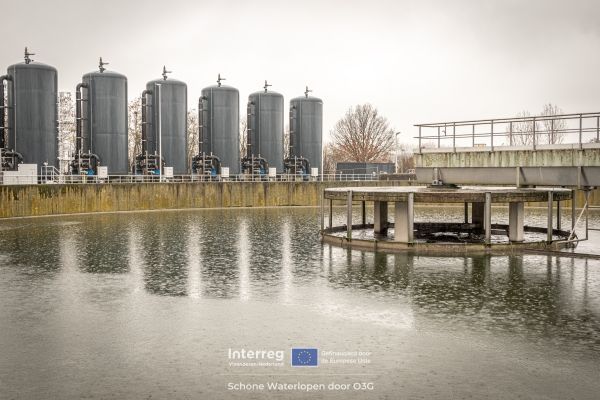
Our wastewater treatment plants are designed to remove, among other things, organic material, nitrogen and phosphorus from wastewater. This is largely achieved through mechanical, biological and chemical processes. Residues of pharmaceuticals are more difficult to deal with, because many medicines are chemically stable and therefore difficult to biodegrade. Some of them pass through conventional water treatment and end up in rivers and streams with the treated wastewater.
To tackle these remaining micro-pollutants, an additional, fourth treatment step is needed. Various technologies are suitable for this.
Three technologies under the microscope
Ozonation: effective, but not without risks
In ozonation, ozone gas is added to the treated wastewater. Ozone breaks down the molecular structure of many organic contaminants, making them more easily biodegradable. Depending on the medicine, removal efficiencies range between 50 and 90%.
There is, however, a point of attention. During the oxidation process, undesirable by-products can be formed, including the potentially harmful bromate. That is why ozonation is often combined with an additional treatment step.
Activated carbon: binding contaminants
In activated carbon filtration, pharmaceutical residues and other organic microcontaminants adhere to the carbon surface. For many substances, the technique removes 60 to 95% and produces relatively few by-products.
However, the activated carbon becomes saturated over time and must be replaced and processed. This entails recurring costs.
Membrane filtration: advanced separation
Nanofiltration and reverse osmosis retain contaminants using membranes. The water is forced under high pressure through a selective membrane.
These techniques can achieve removal efficiencies of around 80%, but they require a lot of energy and are relatively expensive. In addition, a concentrated residual stream is created in which the retained contaminants accumulate. That stream must also be further treated.
The future lies in smart combinations
No single technology removes all pharmaceutical residues. The challenge is therefore not simply to remove as many substances from the water as possible, but to do so in a technically, economically and ecologically responsible way.
That is why attention is shifting to combinations of complementary treatment techniques. Ozonation and activated carbon, for example, can complement each other. In addition, research is under way into alternatives such as UV treatment with hydrogen peroxide, enzymatic filtration and treatment using plants or algae.
The central question for water managers and technology developers is which combination offers the best balance between removal efficiency, energy consumption, residual streams and costs.
Treat where necessary, prevent where possible
However advanced the technology becomes, wastewater treatment remains only one part of the solution. Preventing pharmaceutical residues from ending up in wastewater can reduce the pressure on our treatment plants.
That is why the European project PREWAPHARM is examining how pharmaceutical pollution can be tackled closer to the source. Partners from seven North-West European countries are testing and demonstrating measures at various levels, from targeted treatment at healthcare facilities to adapted prescribing behaviour and awareness-raising. The combination of source measures and targeted additional water treatment thus offers prospects for improved water quality.
This article is based on our article ‘Water treatment in practice: pharmaceutical residues slip through’ that originally appeared in Huisarts Nu (2026, 55(4)).