
Tackling agricultural discharges: CARE+ transforms data into action
In the catchment area of the Collievijverbeek and Babillebeek near Roeselare, the Interreg project CARE+ links water quality measurements to targeted actions with farmers. Halfway through the project, significant nitrate pollution has been addressed, 194 farmers surveyed, and almost 17 m³ of wastewater collectively collected for processing.
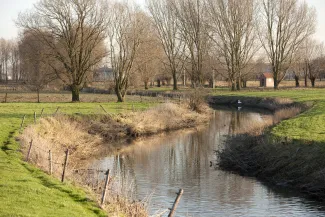
From Nitrate Alarm to Creekside Investigation
Where does an increased nitrate concentration originate from? To answer this question more quickly, the Flemish Environment Agency installed a nitrate sensor in the project area. If the nitrate standard of 50 mg/l is significantly exceeded, an alarm is triggered.
Subsequently, Inagro ventures into the field. Staff members walk upstream along the creek and measure the nitrate concentration at various discharge points using test strips. This allows them to localize the pollution source more accurately. This approach has already managed to address a significant point source of nitrate contamination.
This action builds on the previous monitoring within CARE+, which demonstrated increased concentrations of nutrients and pesticides at various locations. The project focuses both on pollution from a single identifiable source and on diffuse contamination from agricultural land.
Local Measurement Results Provide Farmers with Guidance
Since April 2026, Inagro has been sending out the newsletter ‘Water Quality in Focus’ every two months to farmers, contract sprayers, and local distributors of crop protection products in the project area.
The newsletter compiles the recent measurement results for nitrates and pesticides and ties them to practical considerations. Topics include fertilization, seed treatment, and preventing point source pollution. The Good Practice Code and site-specific spraying techniques are also explained.
This way, stakeholders quickly gain insight into what is being measured in their environment and which good practices can help prevent pollution.
Survey Among 194 Farmers Determines Next Actions
The fieldwork with farmers is a second pillar of CARE+. Fieldworker Wim Vercoutter from the province of West Flanders has completed his survey: 194 out of 204 farmers in the project area participated.
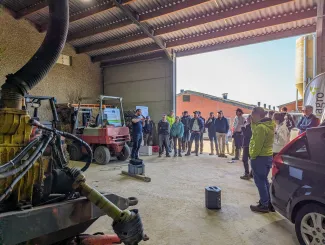
The responses confirm that further information and guidance are needed on:
- limiting the drift of crop protection products during spraying;
- carefully filling and cleaning spraying equipment;
- spreading fertilization over multiple occasions;
- reducing erosion and preventing runoff of silage effluent.
Based on these insights, the project team is working on an awareness campaign.The survey thus guides the topics on which further communication and guidance should focus.
Collective Collection Makes Wastewater Treatment More Accessible
In addition to advice and information, CARE+ also provides practical support. Inagro requested quotes from various processors and offered farmers in the project area the opportunity to have their wastewater collected and treated collectively.
In April 2026, five farmers participated. Together, they had 16.86 m³ of wastewater collected at a price of € 141.07 per m³. By bundling the collection, the transportation costs are divided among several participants, making the price more attractive than individual collection. This year too, Inagro is organising a collective purchase for wastewater.
Exploring Funding Based on Impact
Taking measures also requires financial resources. That’s why the CARE+ team is exploring whether an ‘impact bond’ could offer opportunities for the project area.
Farming for Climate is holding discussions with financial institutions about this. The intended model should provide farmers with resources to take quicker actions regarding, among other things, soil coverage, carbon build-up, and weed and pest control.
When the agreed positive impact is achieved, such as an improvement in water quality, other organizations would compensate the financiers. The organizations that will take on this role still need to be determined. Thus, this form of financing within CARE+ is still in the exploratory phase.
VITO Supports Targeted Choices with Water Quality Data
Within CARE+, VITO is developing the WaterProtect tool and is guiding the approach to diffuse discharges. The tool combines water quality measurements with data on, among other things, land use, precipitation, and erosion. This supports discussions with farmers and helps to determine where which measures are needed.
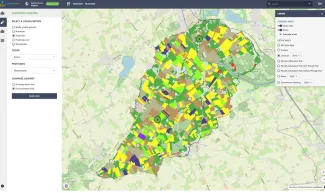
The interim actions demonstrate how CARE+ connects measurements, field research, and practical support. In this way, the further approach to agricultural discharges in the area takes shape.
Would you like to know more about the approach or lessons for your region? Visit the CARE+ project page or contact Charlotte Boeckaert.